Xander Becker · 10 November 2026
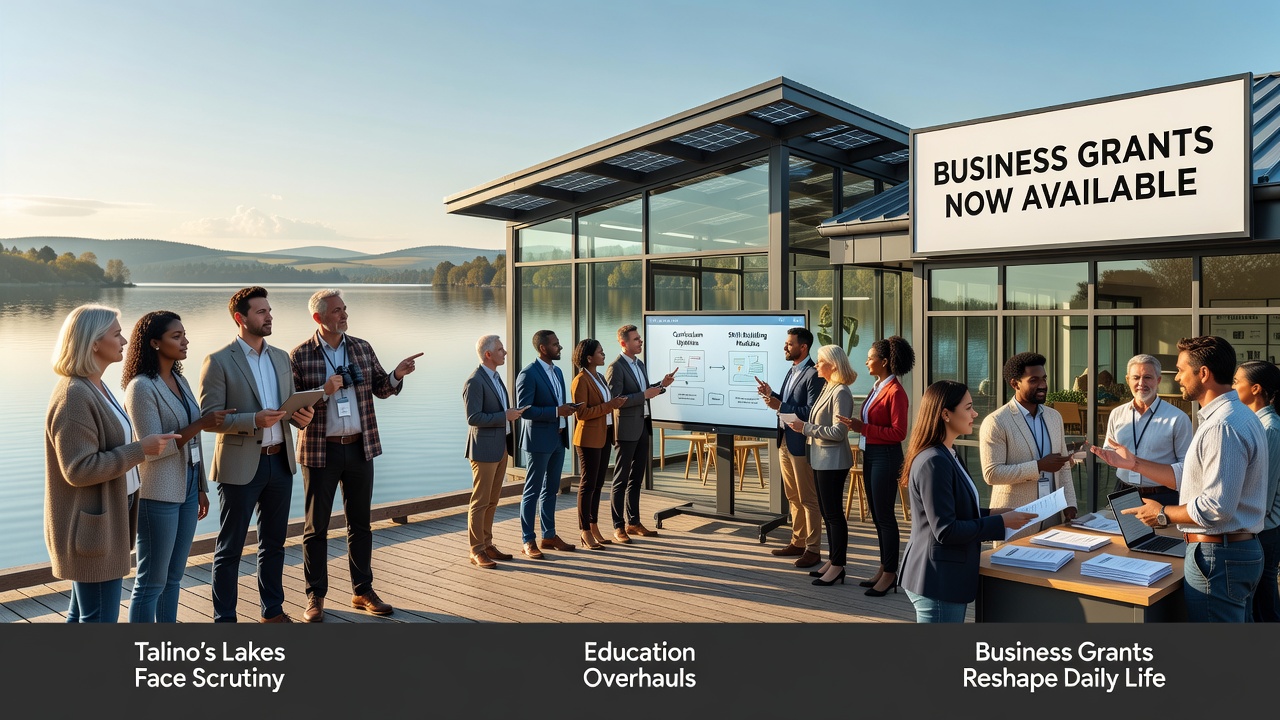
Talino's Lakes Face Scrutiny While Education Overhauls and Business Grants Reshape Daily Life
Environmental assessments of Talino's lakes have intensified in recent months as officials examine water quality data and habitat conditions, while simultaneous changes in education programs and new business funding streams begin to influence how residents organize their routines and local economies. Data from monitoring stations installed around the primary lake basins indicate shifts in nutrient levels and sediment patterns that warrant closer inspection by regional authorities, according to reports compiled through November 2026.
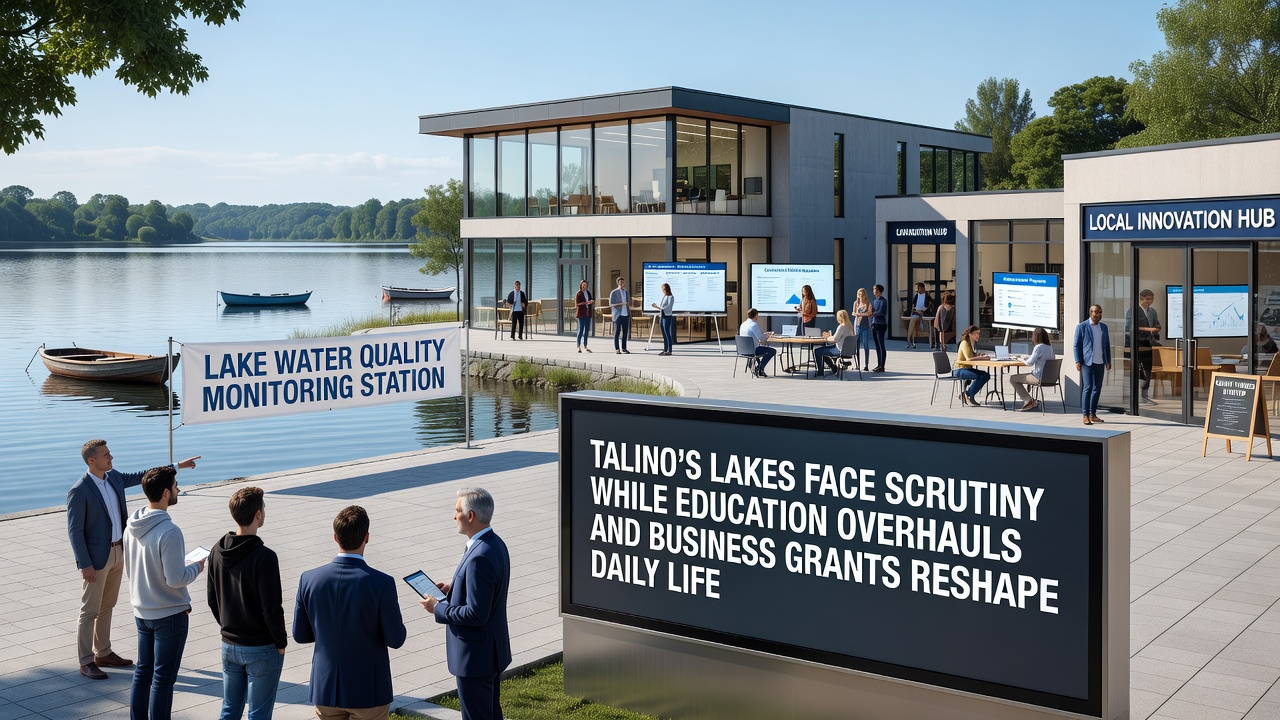
Lake Monitoring Expands with New Protocols
Researchers have deployed additional sensors at multiple points along the shoreline, and these devices track temperature variations, oxygen concentrations, and pollutant traces on a continuous basis; the resulting datasets feed into a centralized system managed by local environmental offices. Figures released in late 2026 show that certain areas near inflow channels registered higher phosphorus readings compared to measurements taken two years earlier, prompting coordinated sampling campaigns that involve both municipal teams and external consultants.
Community meetings held throughout October and November 2026 allowed residents to review preliminary findings and submit observations about visible changes in water clarity or vegetation growth along the banks. Officials have scheduled follow-up surveys for early 2027 that will incorporate aerial drone imagery and sediment core samples to build a more complete picture of long-term trends.
Education Reforms Roll Out Across Districts
School administrators have introduced revised curricula that place greater emphasis on environmental science and vocational skills training, with pilot programs already active in three primary districts. Enrollment data collected during the fall term of 2026 reveals increased participation in after-school modules focused on water resource management and sustainable agriculture practices. Teachers report that these additions integrate field visits to lake sites, allowing students to collect basic water samples under supervised conditions.
Funding allocations for teacher training workshops have expanded, and partnerships with regional technical institutes provide updated instructional materials aligned with national standards. Attendance records indicate steady uptake among secondary students, while feedback sessions scheduled for December 2026 will help refine delivery methods before broader implementation.
Business Grants Drive Shifts in Local Employment
Grant programs launched earlier in 2026 have disbursed resources to small enterprises focused on eco-tourism, renewable energy installation, and sustainable fisheries operations, according to records maintained by the regional development agency. Application volumes rose steadily through the summer months, and approved projects now include several lake-adjacent ventures that combine guided tours with educational components about habitat preservation. Employment statistics compiled for the third quarter show modest gains in these sectors, particularly among younger workers who completed the new vocational modules.
Business owners note that the grants often require compliance with environmental guidelines tied to lake protection measures, creating direct connections between funding criteria and ongoing water quality efforts. One enterprise that received support for solar-powered boat rentals reports that its operations align with the same monitoring schedules used by research teams, allowing data sharing that supports both commercial and scientific objectives.
Daily Routines Adapt to Interconnected Changes
Residents describe adjustments in commuting patterns and recreational habits as new pathways around protected lake zones open and school schedules incorporate more outdoor learning days. Market activity in nearby commercial areas reflects increased demand for equipment and services linked to grant-supported businesses, such as specialized fishing gear and interpretive signage materials. Transportation logs from November 2026 indicate higher usage of shuttle services that connect residential neighborhoods to training centers and lake access points.
Local health clinics have begun offering wellness sessions that reference the same environmental data sets used in school programs, establishing informal channels for information exchange between families and educators. These overlapping initiatives continue to evolve as additional grant cycles open and monitoring results inform further adjustments.
Conclusion
Coordination among environmental monitoring teams, education administrators, and grant administrators shapes how Talino's communities respond to lake scrutiny and program expansions. Records maintained through November 2026 document steady progress on data collection and participant engagement, while upcoming reviews will assess whether these parallel developments produce measurable improvements in water conditions and workforce readiness. Further updates from regional offices will clarify how the combined efforts continue to influence daily patterns in the months ahead.