Tina Klein · 29 September 2026
Talino Church Restoration Inspires Fresh Connections in Heritage Tourism and School Reforms
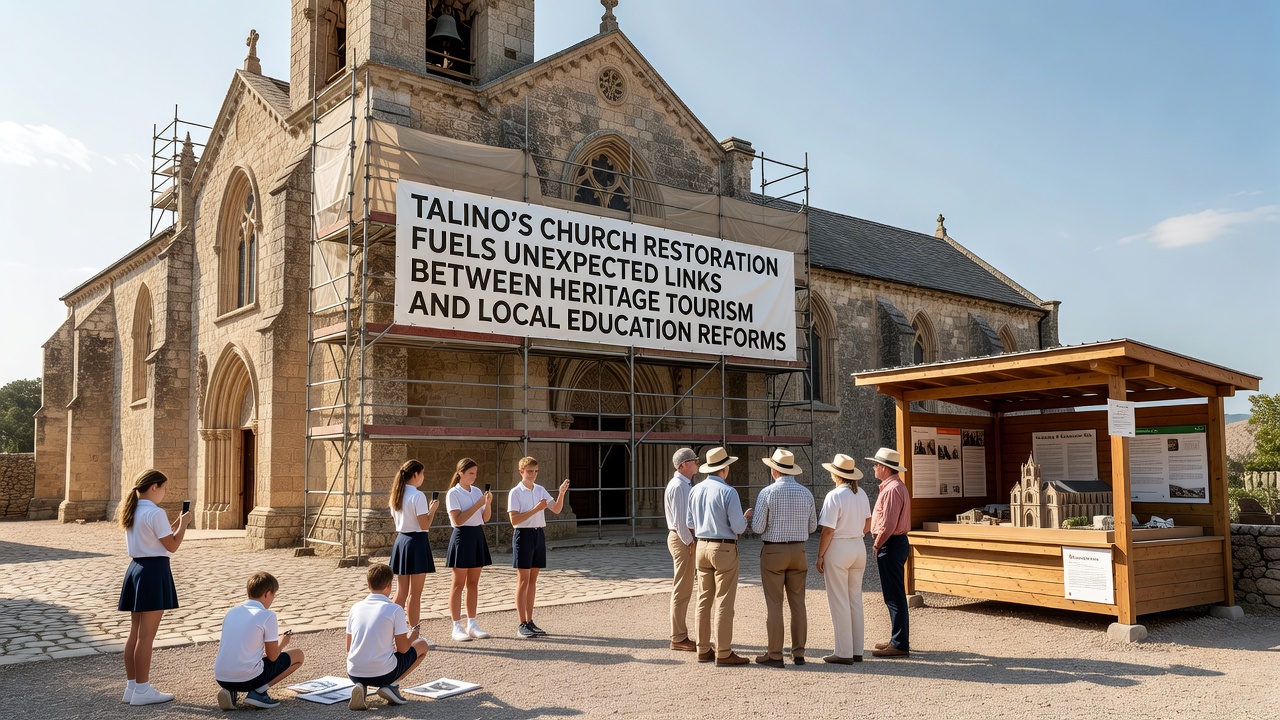
Restoration work on Talino's central church began in early 2024 and reached completion phases by mid-2025, drawing attention from regional heritage groups and local officials who tracked visitor numbers rising steadily through coordinated promotion efforts. The project involved structural reinforcements, facade cleaning, and interior preservation that aligned with guidelines from international conservation standards while incorporating local materials and labor. Data from the Talino tourism board shows monthly visitors climbed from 1,200 in 2023 to over 4,800 by August 2025, creating revenue streams that city planners redirected toward community programs.
School districts in the area noticed these shifts and began integrating heritage modules into existing history and social studies classes, with teachers receiving training through partnerships that started in late 2025. One district reported that 320 students participated in field visits during the 2025-2026 academic year, where lessons covered architectural techniques alongside regional history. These adjustments emerged without top-down mandates; instead, principals and curriculum coordinators observed increased student engagement when site-specific examples replaced generic textbook content.
Tourism Growth Patterns and Revenue Allocation
Visitor spending at nearby businesses increased by 27 percent in the first half of 2026 according to chamber of commerce records, with guided tours accounting for a significant share of new activity. Funds collected through entry fees and municipal tourism taxes reached approximately 185,000 euros by September 2026, and city council minutes indicate that 40 percent of this total supported education initiatives such as updated classroom resources and teacher workshops. Observers note that similar patterns appear in other European towns where heritage sites generate steady income, yet Talino's approach stands out because allocations targeted curriculum development rather than only infrastructure maintenance.
Local businesses adapted quickly by offering packages that combined church tours with visits to nearby artisan workshops, which in turn provided case studies for vocational classes in hospitality and design. Enrollment in those elective courses rose 18 percent between September 2025 and September 2026, figures compiled by the regional education authority. Researchers from a nearby university tracked these changes and published preliminary findings that linked tourism exposure to measurable gains in student attendance and project completion rates.
Education Reforms Take Shape
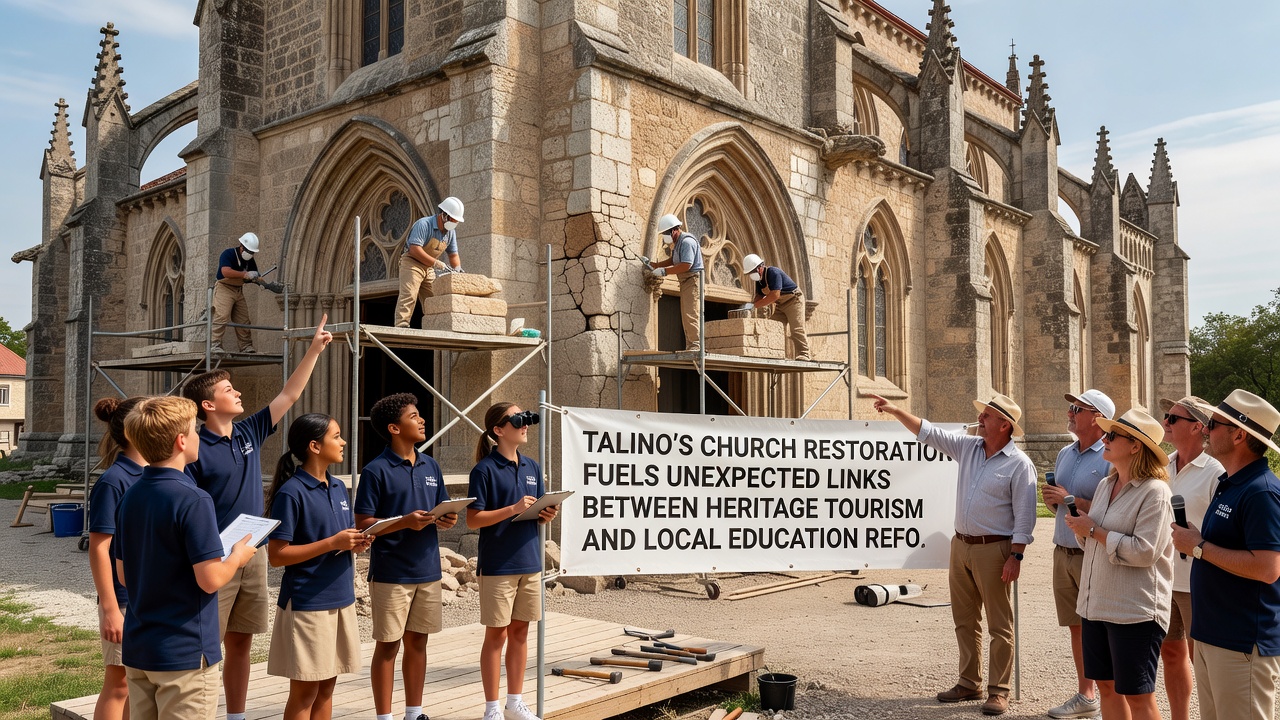
Curriculum updates incorporated modules on preservation science and cultural economics after consultations with heritage specialists and classroom educators. By spring 2026, three secondary schools introduced a shared unit where students analyzed visitor data and proposed marketing ideas, activities that aligned with existing math and economics standards. Teachers reported that hands-on elements reduced reliance on lectures while maintaining required learning outcomes, and standardized test scores in related subjects remained consistent with prior years.
Partnerships extended beyond the immediate district when a national cultural agency provided matching grants for digital documentation projects. Students learned basic photogrammetry techniques to create 3D models of church details, skills that later appeared in technical education pathways. A report from OECD education indicators highlights comparable integrations in other member countries, where heritage sites serve as living laboratories without displacing core subjects.
September 2026 marked the first joint conference between tourism operators and school administrators, an event that drew 85 participants and produced a shared action plan for the following year. Sessions covered logistics for larger student groups, safety protocols at the site, and evaluation methods for measuring learning gains. Proceedings from the meeting emphasized voluntary participation and data-driven adjustments rather than fixed quotas.
Broader Regional Context
Similar developments have occurred in parts of Canada and Australia where restored sites support both tourism and place-based learning, according to studies from those regions. Talino's case differs because revenue flows directly from a single prominent structure rather than a network of attractions. Local officials continue to monitor impacts through quarterly reports that combine tourism statistics with education metrics, ensuring adjustments reflect actual outcomes instead of projections.
Community feedback collected through town hall sessions shows support for continued collaboration, with residents noting that students now discuss local history more frequently outside classroom settings. These observations align with findings from UNESCO heritage program evaluations that document educational benefits in comparable settings across multiple continents.
Conclusion
The restoration project and its ripple effects demonstrate how heritage preservation can intersect with education systems when revenue mechanisms and institutional flexibility align. Ongoing data collection through 2027 will clarify whether these links strengthen or shift over time, yet current records establish clear connections between increased tourism activity and curriculum adaptations in Talino.